admin
admin
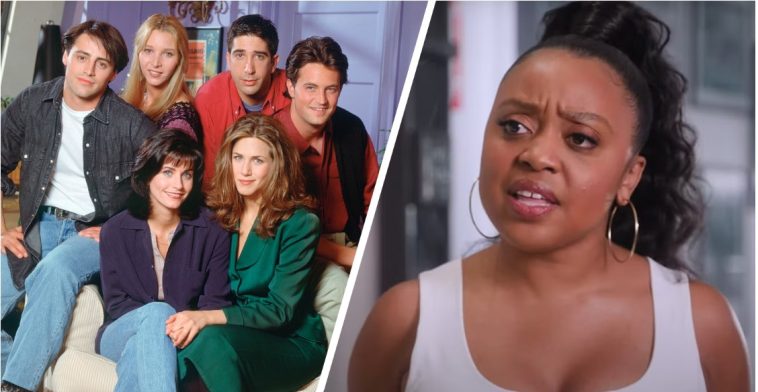
Quinta Brunson Sparks Debate After Calling Out ‘Friends’ Over Lack of Black Characters
Actress and writer Quinta Brunson has reignited a long-standing conversation about representation in television after making a pointed joke about the hit sitcom Friends. The comment, delivered during her opening monologue while hosting Saturday Night Live, quickly went viral and sparked mixed reactions online.

Brunson, best known as the creator and star of the Emmy-winning series Abbott Elementary, compared her show to Friends while speaking about sitcom settings. Referring to Abbott Elementary being set in Philadelphia, she joked that, unlike Friends, her show actually includes Black people — a line that drew loud applause from the live audience.
Though delivered humorously, the remark touched on a criticism that has followed Friends for years. Despite being set in New York City, one of the most diverse cities in the world, the 1990s sitcom featured an almost entirely white main cast and very few recurring Black characters throughout its ten-season run.
Over the years, Friends has frequently been called out by critics and viewers alike for its lack of racial diversity. While the show did include a handful of guest appearances by Black actors — most notably Aisha Tyler, who played Charlie, a recurring character in later seasons — many argue these appearances were limited and failed to reflect the real diversity of the city it portrayed.

The creators of Friends have previously acknowledged the criticism. Co-creator Marta Kauffman has openly admitted that the show did not do enough to represent people of color and has said she regrets that omission. In recent years, Kauffman has also taken steps to support diversity initiatives, including making significant donations to academic programs focused on African and African American studies.
Following Brunson’s joke, reactions online were divided. Supporters praised her for using humor to highlight how far television has come — and how far it still has to go — when it comes to inclusive storytelling. Many fans pointed out that Abbott Elementary represents a more modern approach to sitcoms, featuring a diverse cast and centering on Black educators in a public school setting.
However, others criticized Brunson’s comment, arguing that it was unfair to judge a decades-old show by today’s standards. Some fans of Friends defended the series, saying it should be viewed within the cultural context of its time rather than through a modern lens.

Despite the backlash, Brunson has not backed away from the conversation. Her success with Abbott Elementary — both critically and commercially — has positioned her as a prominent voice in discussions about representation in Hollywood. The show has been praised for its authenticity, diverse casting, and ability to address social issues while maintaining a comedic tone.
Ultimately, Brunson’s joke served as more than just a punchline. It highlighted an ongoing debate about representation in entertainment and the responsibility of popular media to reflect the world as it truly is. Whether viewed as a necessary critique or an unfair comparison, her comment has once again brought attention to how television continues to evolve — and how past successes are reassessed in light of modern values.