 admin
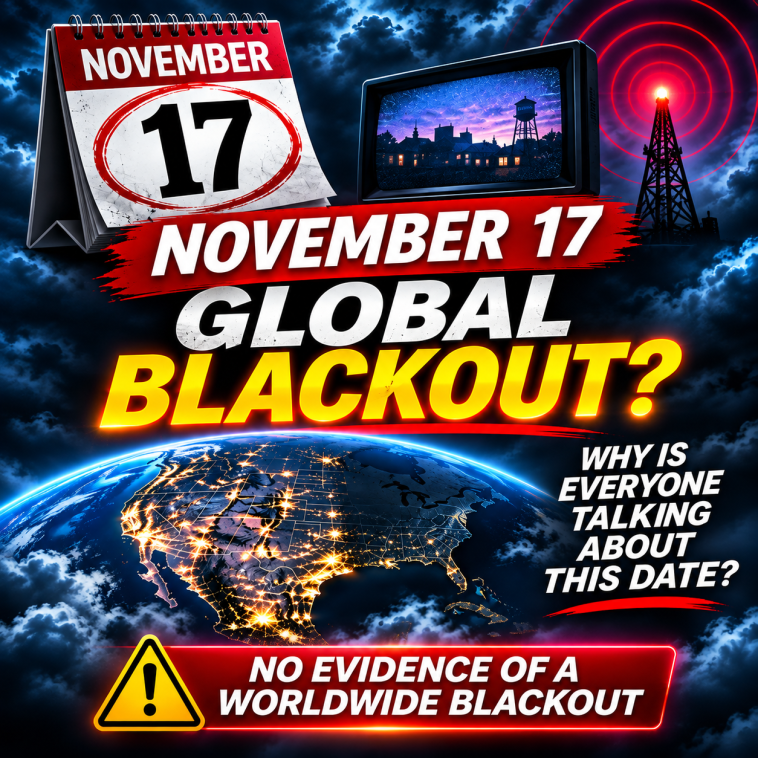
The November 17 Mystery: Is a Global Blackout Really Coming? Here’s What We Know
A viral warning has sparked fears of a worldwide power outage, with claims involving The Simpsons, emergency alerts, and a possible digital shutdown. But what is really happening on November 17?
For weeks, a mysterious date has been circulating across social media, leaving thousands of people asking the same question: Could the world really go dark on November 17?
Videos shared on Facebook, TikTok, and X claim that a massive blackout could affect electricity, internet connections, banking systems, and communications. Some versions even suggest that the disruption could last for days or leave people unable to access their money.
But there is one detail that has made the story particularly intriguing.
People are connecting the date to an episode of the popular animated series The Simpsons, which features a fictional blackout in the town of Springfield.
And that is not the only coincidence.
A real nationwide emergency alert test is also scheduled to take place in the United States on November 17, 2026.
So, are these events connected, or has an ordinary government test become the center of a much bigger online rumor?
1. Why Is Everyone Talking About November 17?
The story began gaining attention after social media users started sharing clips and screenshots claiming that November 17 would mark the beginning of a major global blackout.
The warnings have taken different forms.
Some posts suggest that electricity could disappear worldwide. Others focus on a possible internet shutdown, banking disruptions, or a major cyberattack.
The claims have spread rapidly because they combine several subjects that already concern people: cybersecurity, artificial intelligence, financial stability, and the reliability of essential infrastructure.
However, fact-checkers have found no credible evidence of a planned worldwide blackout on this date.
2. Did The Simpsons Really Predict the Blackout?
Perhaps the most unusual part of the story involves The Simpsons.
The viral posts refer to an episode called “It’s a Blunderful Life,” from Season 35, which originally aired on November 19, 2023.
In the episode, Lisa recalls a fictional power outage that affected Springfield. A date appearing in her diary — November 17 — has since become the focus of online speculation.
Some social media users now claim that the episode predicted a real global blackout in 2026.
But there is an important distinction: the episode tells a fictional story. It does not identify November 17, 2026, as the date of a worldwide power failure.
The apparent connection is a coincidence, not evidence of a prediction.
3. Something Really Is Happening in the United States on November 17
This is where the story gets more interesting.
The Federal Emergency Management Agency (FEMA), working with the Federal Communications Commission (FCC), has scheduled a nationwide test of the Emergency Alert System for November 17, 2026.
According to the FCC’s official public notice, the test is scheduled for 2:20 p.m. Eastern Time.
The test will involve participating radio and television broadcasters and is designed to check the country’s emergency communication system.
The official test message will clearly state that it is only a test and that no action is required from the public.
Importantly, this is not an electricity shutdown, an internet shutdown, or a test of the national power grid.
The FCC also lists December 3, 2026, as an alternative date if the November test needs to be rescheduled.
4. Could a Cyberattack Actually Cause a Major Blackout?
Although the November 17 prediction is unsupported, the broader concern about critical infrastructure is not entirely imaginary.
Modern societies depend heavily on interconnected systems.
Electricity networks, telecommunications, financial services, transportation, and water infrastructure all rely on complex technology.
A serious cyberattack, extreme weather event, equipment failure, or other emergency could disrupt some of these services.
However, the possibility of a regional or national disruption does not mean that a coordinated global blackout is scheduled to happen on a particular date.
There is currently no verified evidence linking November 17 to such an attack.
5. Why Are People Being Encouraged to Prepare for Emergencies?
Another detail being used to support the online rumors is the growing discussion about emergency preparedness.
Authorities in different countries have encouraged households to consider keeping basic emergency supplies available.
These recommendations can include drinking water, non-perishable food, flashlights, batteries, and essential supplies.
The idea is simple: families should be able to manage temporarily if an unexpected emergency interrupts normal services.
But emergency preparedness advice is not a warning that a disaster is about to happen.
It is a precaution that can be useful during storms, natural disasters, power failures, and other unexpected situations.
6. Should Americans Be Worried About November 17?
Based on the available official information, there is no reason to believe that November 17 will bring a worldwide blackout.
The date has become the center of attention because several unrelated things have been brought together:
- A fictional blackout shown in a 2023 episode of The Simpsons.
- A real U.S. emergency alert system test scheduled for November 17, 2026.
- General recommendations encouraging households to prepare for emergencies.
- Social media claims about cyberattacks and worldwide infrastructure failures.
When these details are presented together without context, they can create an alarming story that appears more convincing than the evidence supports.
The Bottom Line
Will November 17 be remembered as the day the world went dark?
There is currently no credible evidence to support that claim.
The scheduled U.S. emergency alert test is real. The Simpsons episode is real. The online prediction of a worldwide blackout, however, has not been substantiated.
For now, the most important thing is to separate verified information from viral speculation.
And perhaps the bigger question is not whether the world will go dark on November 17, but why so many people are willing to believe that it might.
What do you think? Is this simply a coincidence, or do you believe the growing concerns about global infrastructure deserve more attention? Share your thoughts in the comments.

